The platform that helps you win more
The AI platform that turns your institutional knowledge into competitive advantage.
Three capabilities sharing one knowledge graph: AI Knowledge Base, AI Sales Agents, and AI Proposal Automation. Every proposal answer, every call transcript, every knowledge update makes the entire platform smarter. One brain that learns from everything your team does.
01 · AI Knowledge Base
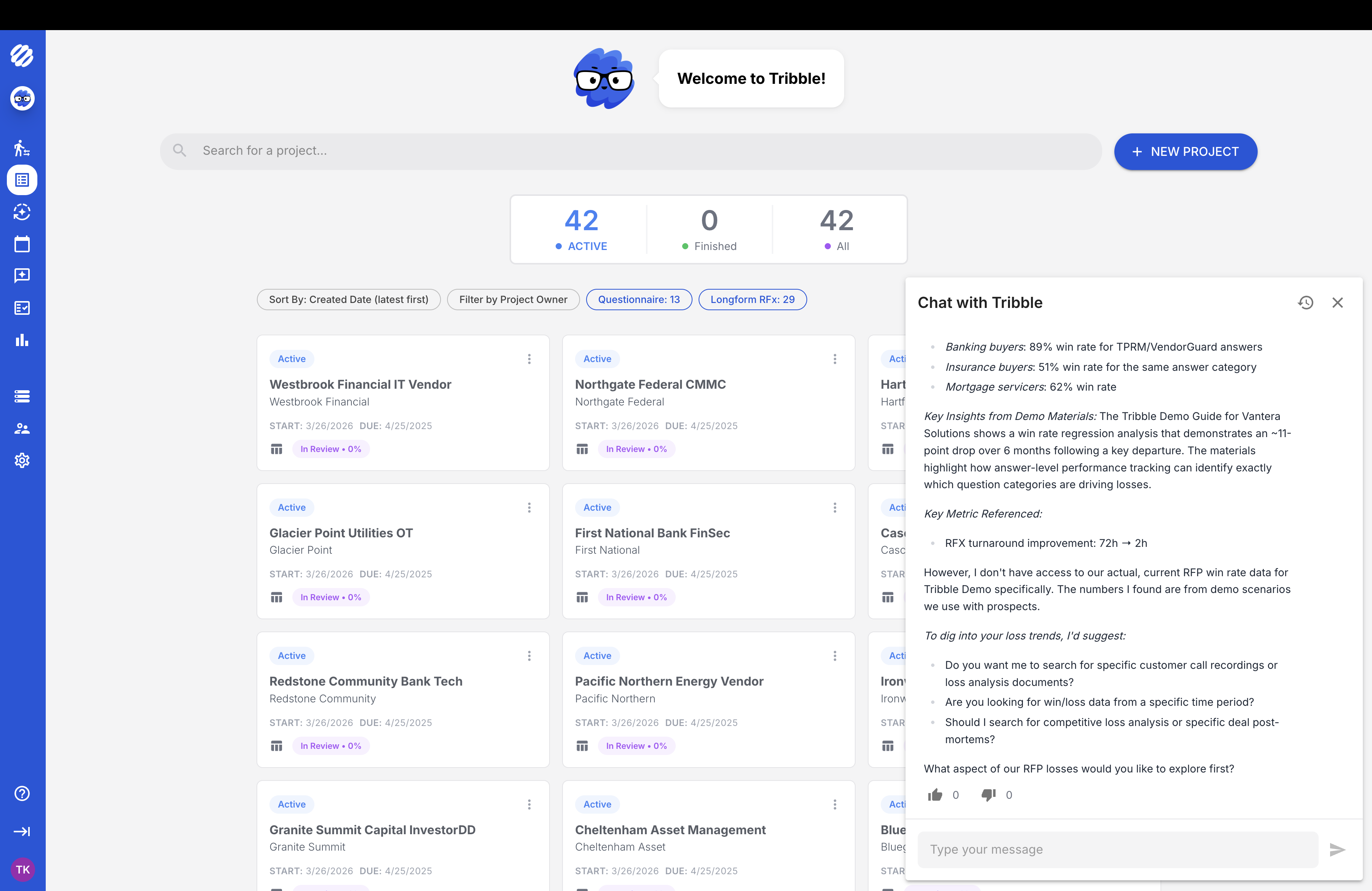
A live knowledge graph built from your connected sources: documentation, past proposals, call recordings, Slack threads, and CRM data. Your team gets answers where they work, with every response traced to its source.
Connected to your document sources, CRM, conversation intelligence, and collaboration tools. When a source changes, the knowledge graph updates. No manual library maintenance.
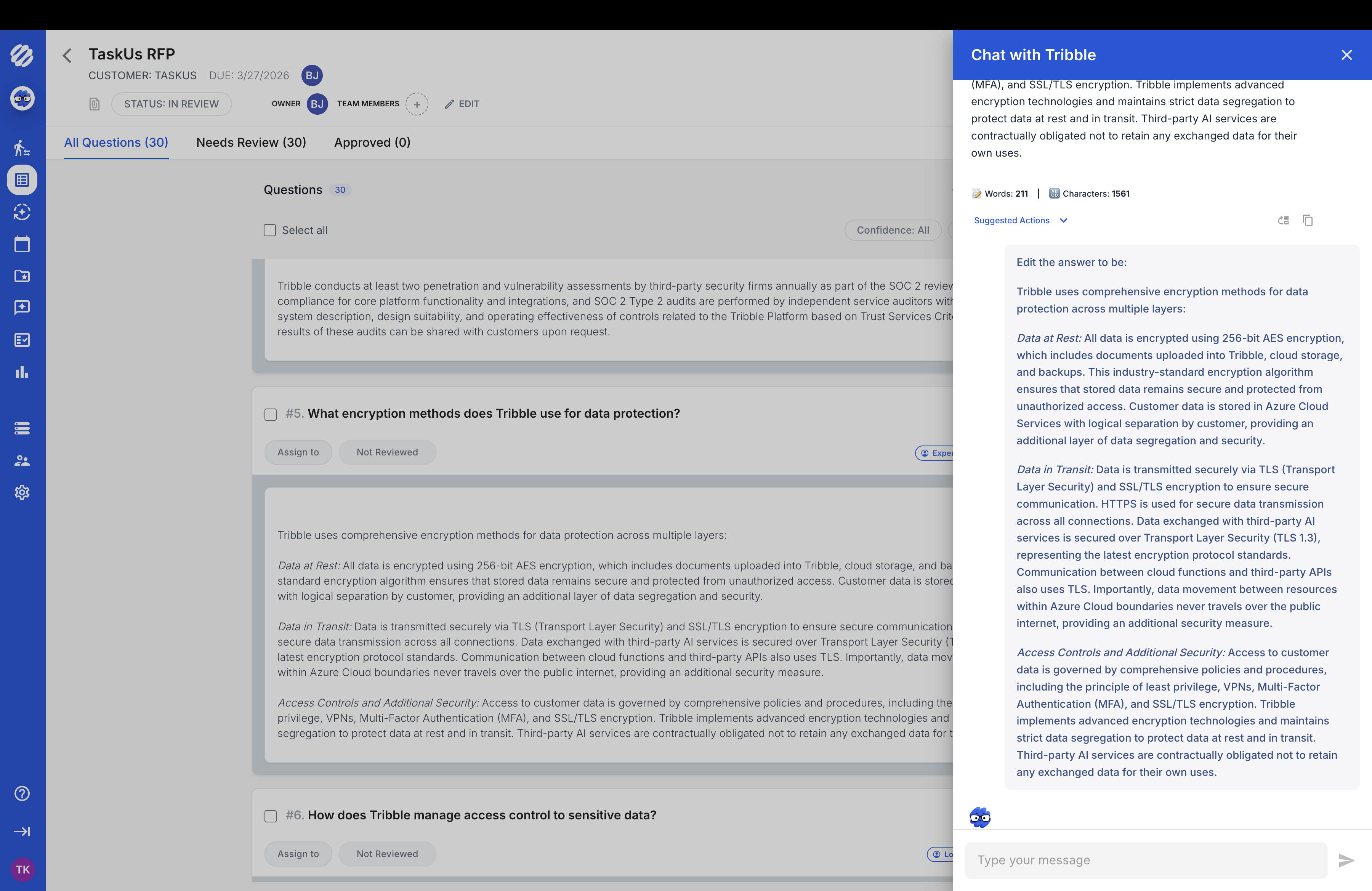
Your team asks questions where they already work. Tribble answers with sourced, cited responses, no context switching, no portal login required.
Every response links to the document, policy, or prior answer it was drafted from. Your team trusts the answer because they can verify it in one click.
02 · AI Sales Agents
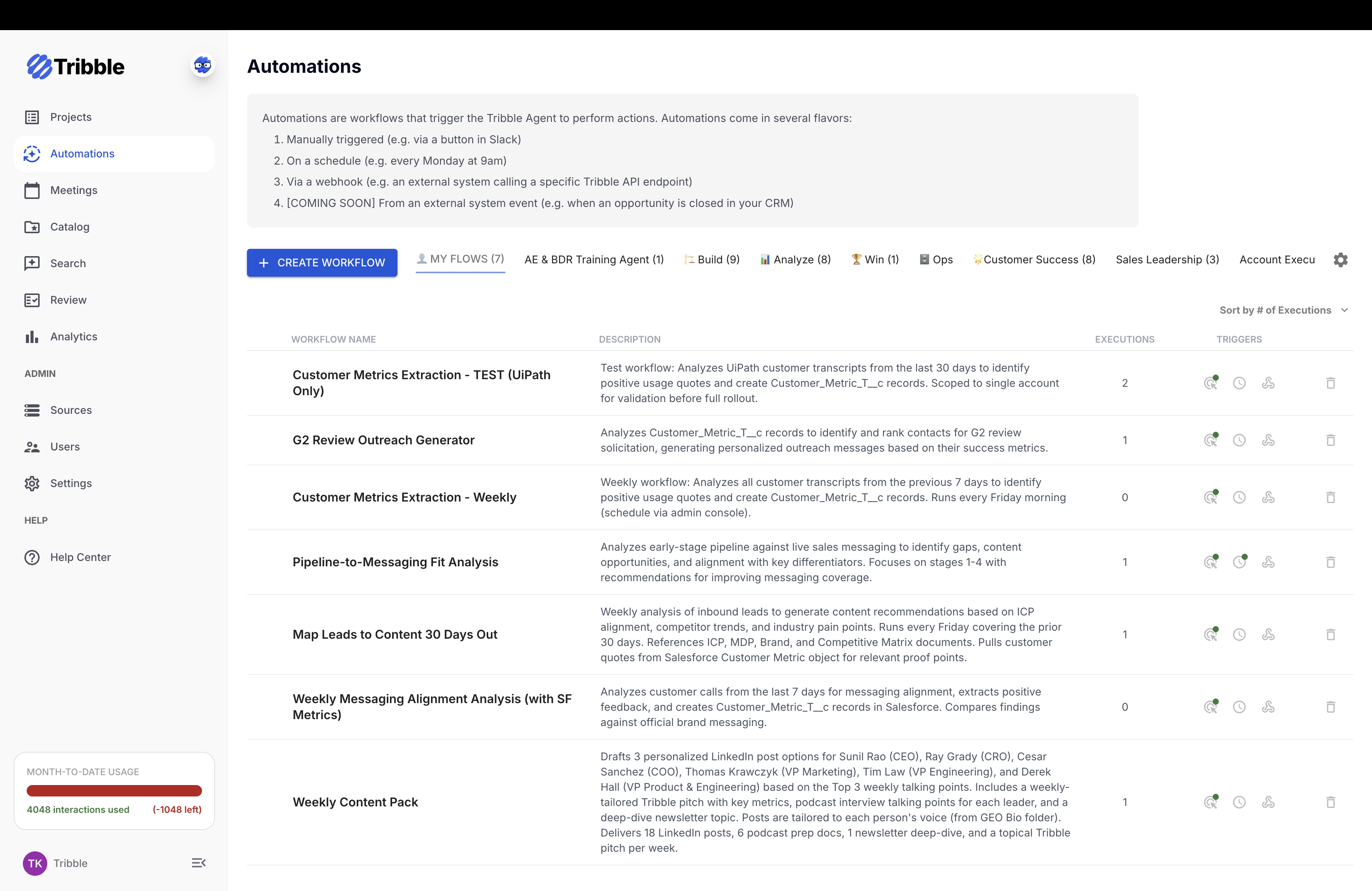
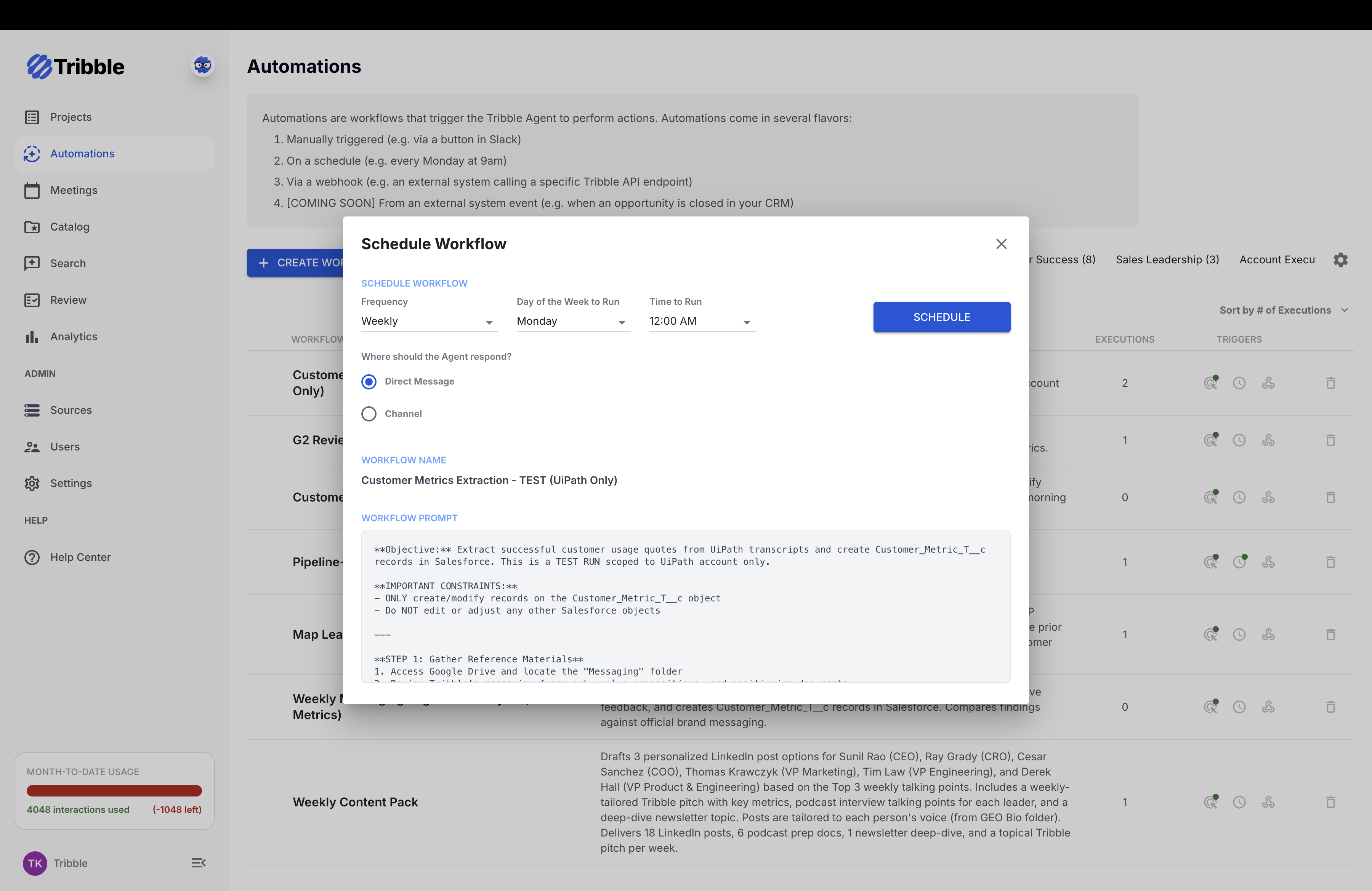
AI agents that prepare your reps before every call, coach them in real time, and handle all the post-call admin (CRM updates, follow-up emails, and action items) automatically.
Auto-generated briefs pulling from CRM history, past proposals, web research, and prior call recordings. Your rep walks in knowing everything.
Live coaching cues during calls using MEDDIC, SPIN, or your custom framework. Surface competitive intelligence and objection handling in the moment.
CRM fields updated, follow-up emails drafted, action items extracted and assigned, all from the call transcript. Your rep approves, not types.
03 · AI Proposal Automation
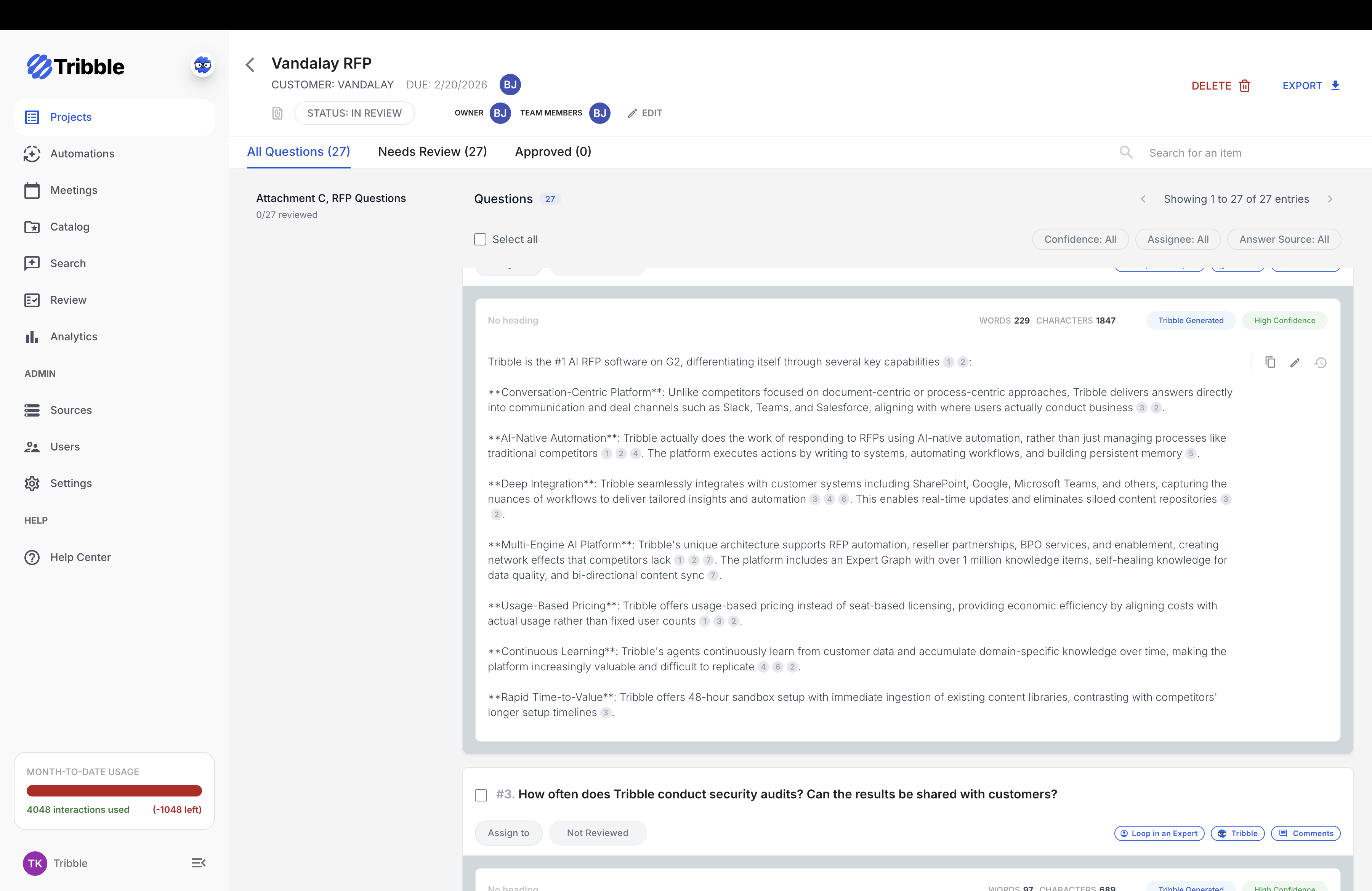
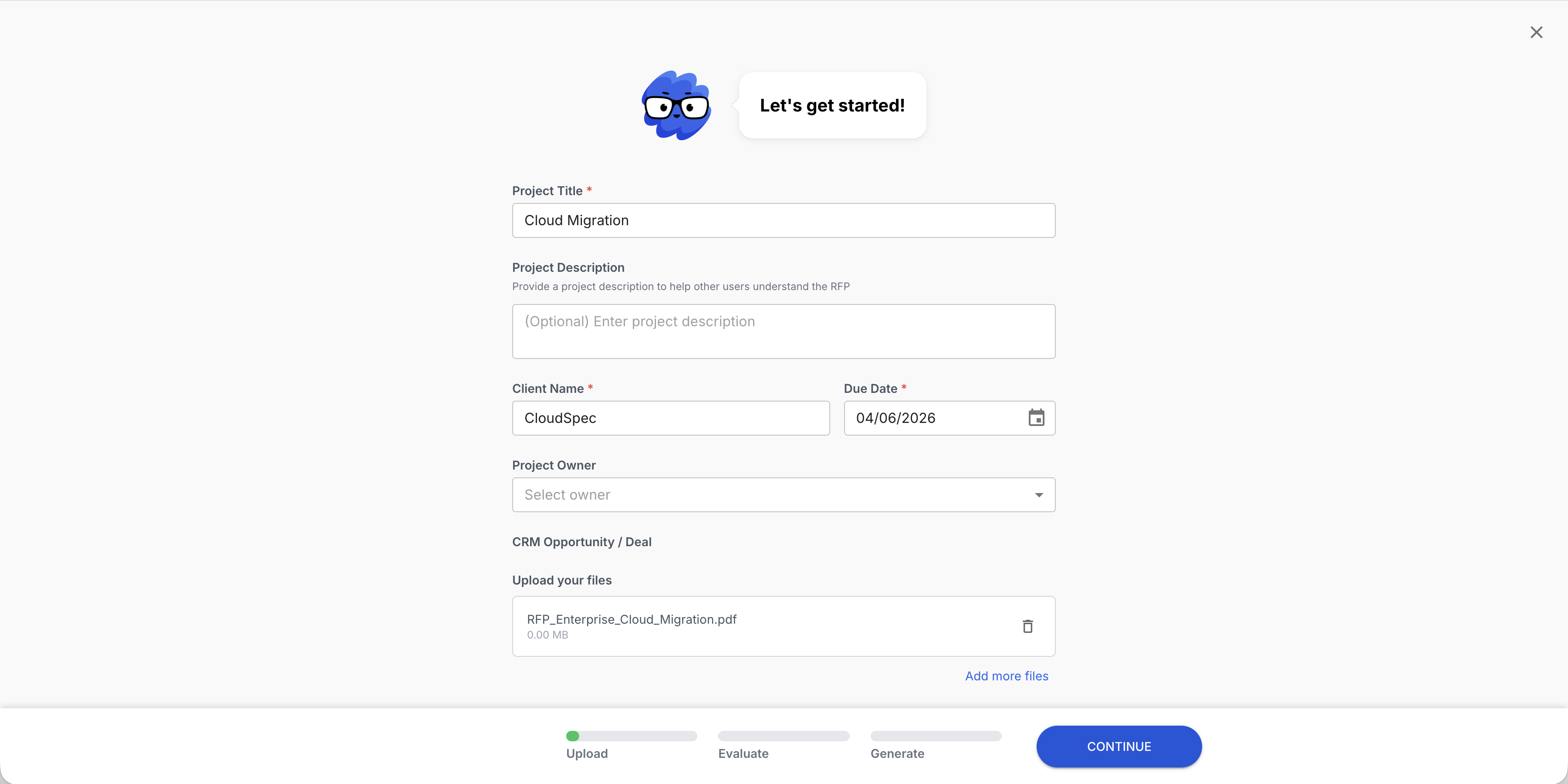
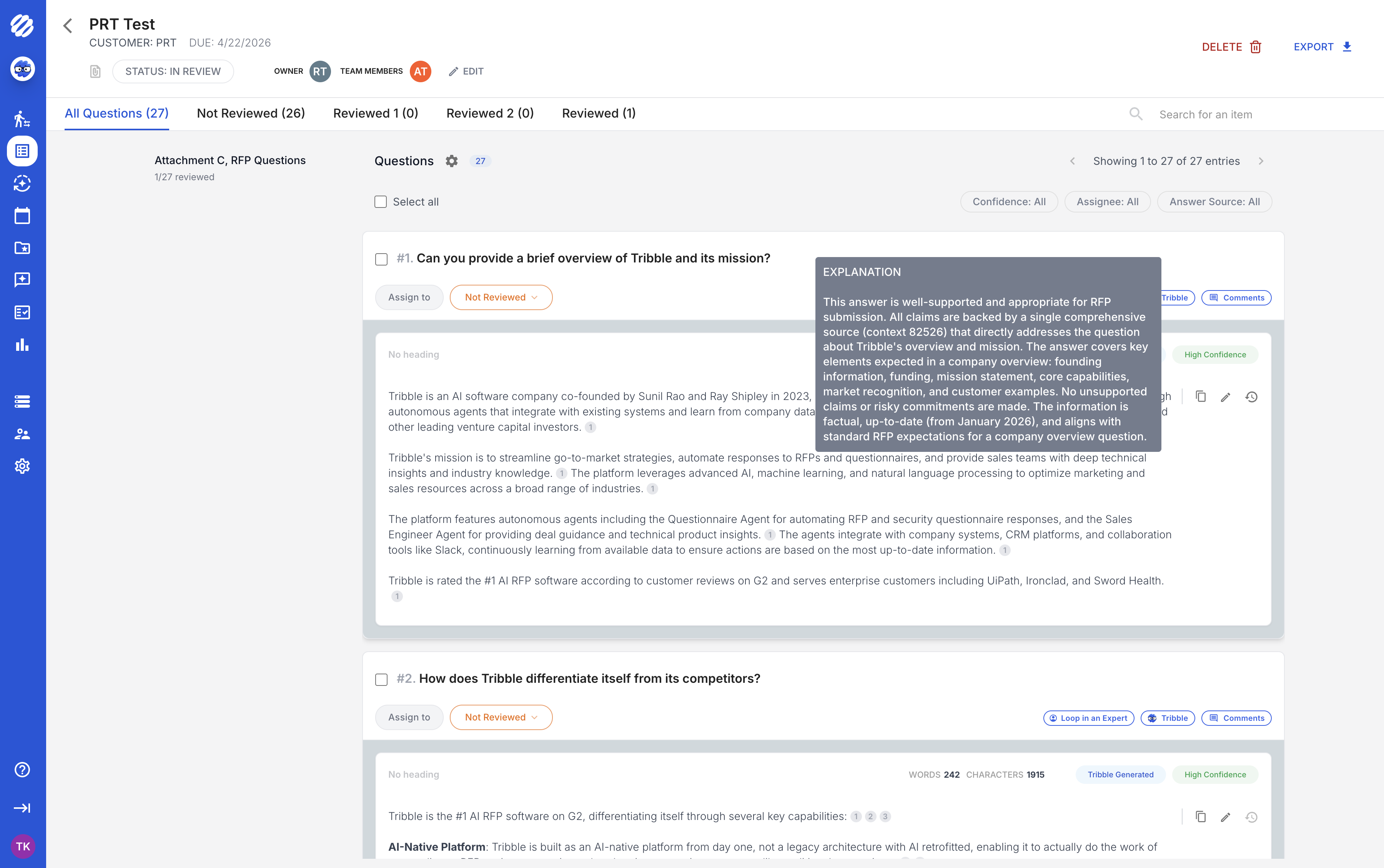
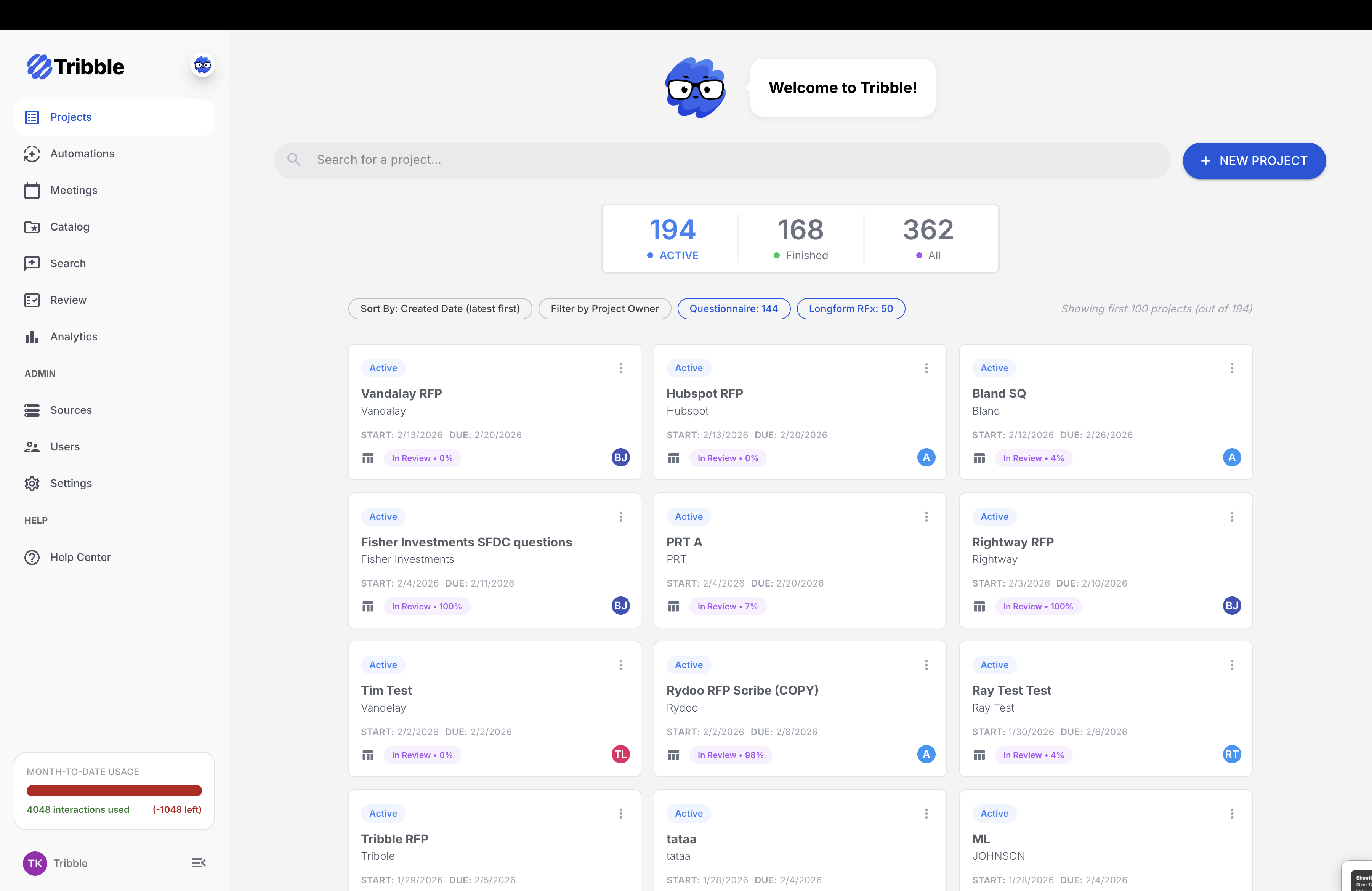
Upload any questionnaire format. Get AI-drafted answers with confidence scores and source citations. Route low-confidence items to the right expert. Track what wins.
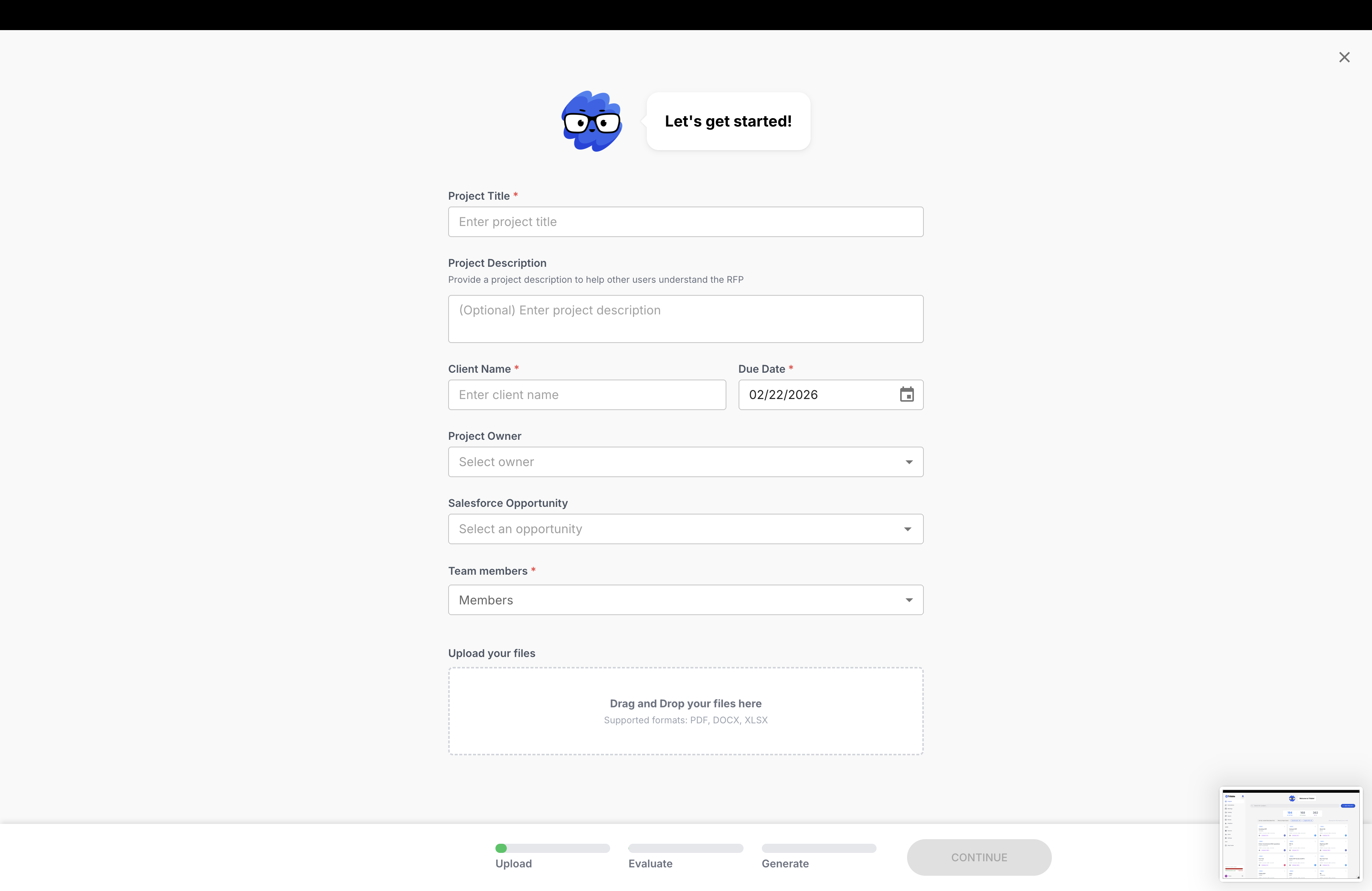
Upload an RFP, DDQ, or security questionnaire in any format. Tribble drafts sourced answers at 20 to 30 questions per minute with a confidence score on every response.
Questions below your confidence threshold are automatically routed to the right SME through Slack or Teams. They review and approve without leaving the conversation.
Tribblytics tracks win/loss at the answer level. Over time, the platform learns which content wins and surfaces those patterns for your next proposal.
The architecture that matters
These aren’t three products bolted together. They share one knowledge graph. When your sales agent captures a competitive insight on a call, that insight is immediately available for proposal responses. When an RFP answer is updated, the knowledge base reflects it instantly. When a proposal wins, Tribblytics feeds that pattern back into everything.
Point solutions create knowledge silos. Your call recordings sit in Gong, your RFP answers in Loopio, your knowledge base in Guru. Tribble connects all three. One brain, not three tools that don’t talk to each other.
By Industry
Every industry has different compliance frameworks, buyer expectations, and response workflows. Tribble adapts the platform to your vertical.
Financial Services
DDQ automation · Investor reporting · Regulatory questionnaires
Healthcare
Health system RFPs · HIPAA questionnaires · Clinical assessments
Enterprise Tech
Security questionnaires · Technical evaluations · Vendor assessments
Government
Public sector RFPs · Compliance documentation · Procurement portals
Insurance
Carrier RFPs · Broker questionnaires · Regulatory submissions
What it looks like when you replace a Loopio + Gong + Guru stack with Tribble.
| Capability | Tribble Platform | Loopio + Gong + Guru |
|---|---|---|
| Shared knowledge graph | ✓ One graph across all three capabilities | Three separate data stores that don't share context |
| Cross-capability intelligence | ✓ Call insights inform proposals; proposal wins inform knowledge base | Manual export/import between tools |
| Single sign-on & admin | ✓ One vendor, one SSO, one audit trail | Three vendor relationships, three admin consoles |
| Outcome tracking | ✓ Win/loss at the answer level across all workflows | Gong tracks calls; Loopio doesn't track outcomes |
| Source attribution | ✓ Every answer links to its source document | Guru has source links; Loopio uses library matching |
| Onboarding | 48 hours | 6 to 12 weeks across three implementations |
| Total cost of ownership | One platform subscription | Three separate contracts, typically 2 to 3x the total spend |
Bring a real RFP, a real call, or a real knowledge question. We’ll show you all three capabilities on your data. No prep, no commitment.
★★★★★ 4.8/5 on G2 · SOC 2 Type II · 40+ Integrations · 48-Hour Onboarding